Why Hormuz Matters: Anatomy of a Chokepoint
Just 33 kilometres wide at its narrowest, with shipping lanes barely 3 km across — and utterly irreplaceable. A short guide to the world's most important oil passage.
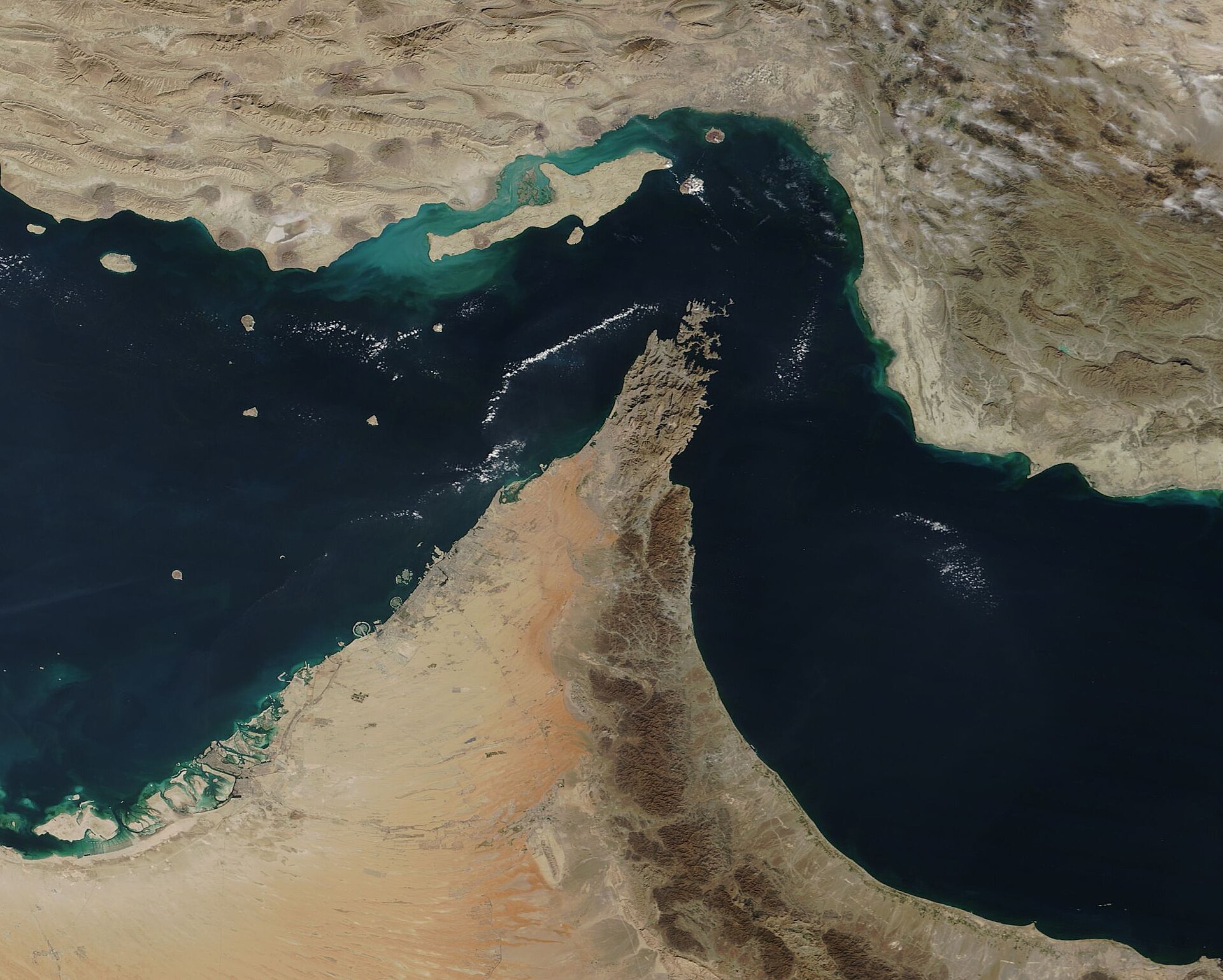
The Strait of Hormuz connects the Persian Gulf to the Gulf of Oman and, beyond it, the open ocean. It is the only sea route out of the Gulf — which means it is the only sea route for the oil and gas of Saudi Arabia, Iran, Iraq, Kuwait, the UAE and Qatar. Geography made it a chokepoint long before politics made it a flashpoint.
The dimensions
At its narrowest, the strait is about 33 km (21 miles) across. Because the deep-water channels hug the shore, the usable shipping lanes are far tighter — roughly 3 km wide in each direction, separated by a buffer zone. That leaves little room to manoeuvre, and it sits within range of the Iranian coast for its entire length.
Why it can't be replaced
A few pipelines bypass the strait — Saudi Arabia's East–West line to the Red Sea, the UAE's link to Fujairah, Iraq's route to the Mediterranean — but together they carry under half of normal volumes, and only crude. There is no overland substitute for the LNG that Qatar ships through Hormuz, nor for the refined products and petrochemicals that also pass through. When Hormuz closes, the alternative is the long way around the Cape of Good Hope, adding weeks to every voyage.
Most of the oil leaving the Gulf has historically gone east — to China, India, Japan and South Korea. Asia, more than the West, depends on Hormuz staying open.
A chokepoint by design
That concentration is exactly what makes the strait such powerful leverage. Control the channel, and you control a quarter of the world's seaborne oil. It is why a single waterway, narrower than many rivers are long, can move global markets — and why the events of 2026 have mattered so far beyond the Gulf.
See the current passage status and traffic on the live tracker, or the full data set in statistics.